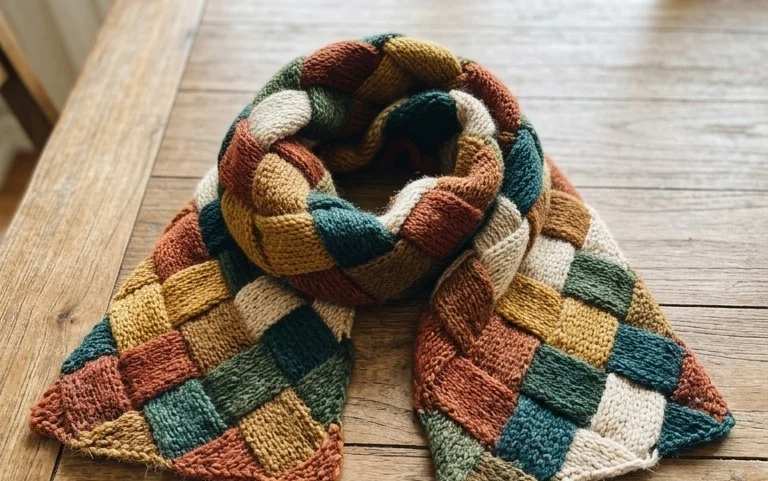
The Entrelac scarf has this wonderful woven look, but it’s all done with knitting stitches. It really makes a simple scarf look super impressive, and it’s actually quite beginner-friendly. You get these cool diagonal blocks and changes in color or texture that just pop. If you’re looking for a project that feels a bit more advanced than it is, or want to make a gift that looks like you spent ages on it, this is it. This pattern will guide you through creating those distinct Entrelac squares, stitch by stitch. We’ll cover the yarn choices that make the pattern stand out and give you all the details you need to get started on your own geometric masterpiece.
Knit Entrelac Scarf: A Beginner-Friendly Geometric Masterpiece
The Entrelac scarf brings a fantastic textured look to your knitting, reminiscent of woven fabric but created entirely with stitches. It’s a project that looks far more complicated than it actually is, making it a wonderful way to impress yourself and others. The diagonal blocks and color changes create a visually striking piece that’s surprisingly straightforward to knit.
Yarn and Hook Recommendations
Choosing the right yarn is key to making your Entrelac scarf both beautiful and functional. For this pattern, a smooth, worsted-weight yarn is ideal. It shows off the Entrelac pattern clearly without being too bulky or too fine.
- Fiber Content: Wool or a wool blend is a great choice for warmth and drape. Acrylic yarns are also excellent, especially for beginners, as they are affordable, washable, and come in a huge range of colors. Cotton blends can work but might result in a stiffer fabric.
- Weight: Worsted weight is the standard recommendation. If you use a lighter weight (like DK), your scarf will be thinner and take longer. A heavier weight (like bulky) will create a very thick, warm scarf but might obscure some of the Entrelac detail. Always check the yarn label for its weight category.
- Yardage: For a scarf that’s about 6 feet long and 8 inches wide, you’ll likely need around 800-1000 yards. This can vary based on your gauge and the exact yarn you select. It’s always better to have a little extra yarn than to run out!
- Color: This pattern shines with contrasting colors. You can use two alternating colors for a classic Entrelac look, or go for three or even four colors. Alternatively, a variegated yarn can create a beautiful, blended effect within each block.
Stitch Techniques Used
The magic of Entrelac comes from a few fundamental knitting techniques worked in a specific sequence. Don’t let the name intimidate you; once you break it down, it’s quite logical.
- Knit (k): The basic stitch. You’ll be doing a lot of this.
- Purl (p): The reverse of the knit stitch. Essential for creating the blocks.
- Slip Stitch (sl st): This involves slipping a stitch from one needle to the other without working it. In Entrelac, you often slip stitches purlwise with the yarn in back or front. This creates a neat edge for your blocks.
- Knit Two Together (k2tog): Decreasing two stitches into one. This is how the diagonal edges of the blocks are formed.
- Purl Two Together (p2tog): The purl equivalent of decreasing. You’ll use this to decrease on the purl side of your work.
- Picking up stitches: This is a core technique for Entrelac. You’ll be picking up stitches along the edges of previously worked blocks to create the new ones. The pattern will specify how many stitches to pick up and where.
Tips for Beginners
Entrelac can seem daunting, but with a few pointers, it’s totally achievable for beginners. The key is to take it one block at a time and not get overwhelmed by the overall pattern.
- Read the entire pattern first: Before you cast on, understand the sequence of knitting short rows, turning, picking up stitches, and decreasing.
- Use stitch markers: Place markers at the beginning and end of each section where you’ll be working short rows or picking up stitches. This helps you keep track of where you are.
- Count your stitches carefully: Especially when picking up stitches, it’s easy to miscount. Take your time and double-check.
- Work a swatch: Even though it’s a scarf, knitting a small swatch of Entrelac will help you get a feel for the rhythm of the pattern and check your gauge.
- Don’t be afraid to frog (undo): If you realize you’ve made a mistake a few rows back, it’s often easier to pull out your work and fix it rather than try to correct it later.
- Focus on one module at a time: The pattern is built in repeating sections. Concentrate on completing one diagonal block before moving to the next.
How to Customize
This Entrelac scarf pattern is wonderfully adaptable to your personal style.
- Colors:
- Two-Color: The most classic look. Alternate your two colors every few rows or every time you start a new color of blocks.
- Multi-Color: Use 3, 4, or even more colors. You can change colors for each set of blocks or create a more random sequence.
- Self-Striping or Variegated Yarn: Use one of these yarns for a surprisingly different Entrelac effect. The colors will blend and shift naturally within the blocks.
- Sizes:
- Width: To make the scarf wider, you’ll need to increase the number of stitches you cast on initially and adjust subsequent pick-up rows accordingly. This usually means adding more stitches in groups of four (the typical width of an Entrelac block).
- Length: Simply knit more or fewer Entrelac modules until the scarf reaches your desired length. Remember to factor in your yarn usage.
Care Instructions for the Finished Piece
Proper care will ensure your Entrelac scarf stays beautiful for years to come.
- Washing: Most wool or acrylic yarns can be hand-washed or machine-washed on a delicate cycle with cool water. Always check the yarn label for specific instructions.
- Detergent: Use a mild wool wash or a gentle detergent. Avoid bleach or fabric softeners, as they can damage fibers.
- Drying:
- Hand-wash: Gently squeeze out excess water (don’t wring!). Roll the scarf in a clean towel to absorb more moisture. Lay it flat on a drying rack or a clean towel, reshaping it to its original dimensions.
- Machine-wash (delicate): Follow the same advice for drying as with hand-washing; do not put it in the dryer unless the yarn label specifically allows for it on a very low setting.
- Storage: Store your scarf folded flat in a drawer or on a shelf. Avoid hanging it for long periods, as the weight can stretch the fabric out of shape. If storing for an extended period, consider adding cedar balls to deter moths.
Project Ideas
Beyond a simple scarf, the Entrelac technique can be applied to many other beautiful knitted items.
- Cowl: Knit a shorter, wider version and seam the ends together for a cozy cowl.
- Hat: Incorporate Entrelac into the body of a hat for a unique textured crown.
- Blanket or Throw: For a larger project, Entrelac makes a stunning, textured blanket. You can knit it in panels and seam them together, or knit it seamlessly if you’re comfortable with larger circular needles or managing many stitches.
- Bag: A firm wool yarn would work well for an Entrelac tote bag.
- Cushion Cover: Add a modern, geometric touch to your home decor with an Entrelac cushion cover.
- Mittens or Gloves: You can adapt the technique for the back of hand for a striking effect.
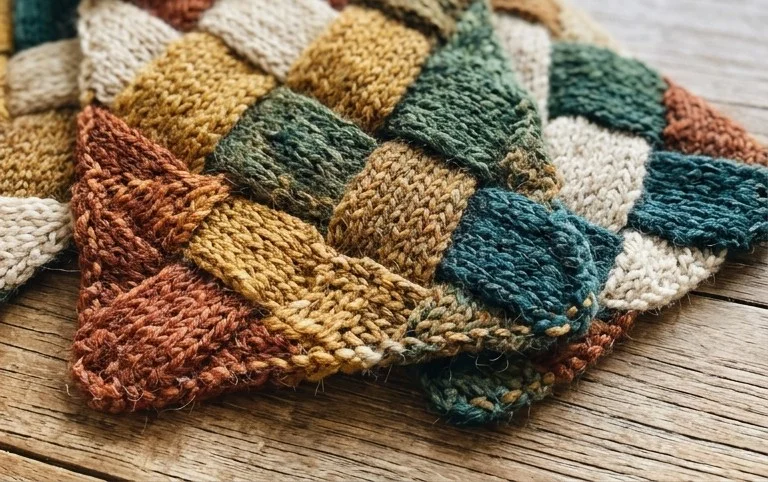
You’ve now got all the instructions to knit your own beautiful Entrelac scarf. Don’t be afraid to experiment with different color combinations or even different yarn weights to see how they change the final look. Once you finish, I’d love to see it! Share a photo of your scarf on social media and tag us – it’s always inspiring to see what everyone creates. If you enjoyed this project, we have more knitting patterns you might like. Happy knitting!